

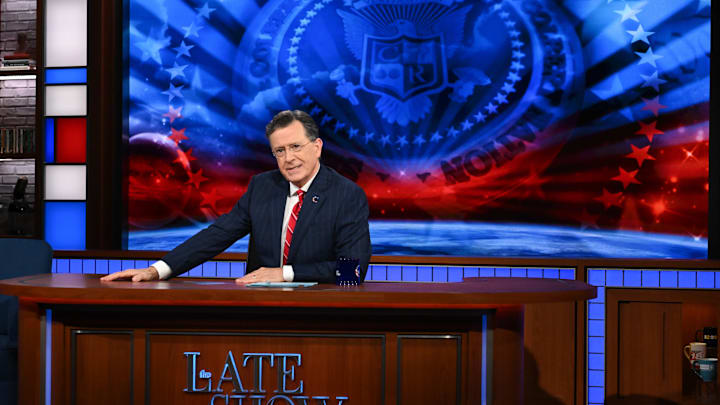
With The Late Show with Stephen Colbert set to wrap up its run in the coming weeks, Stephen Colbert is reflecting on what defined his decade behind the desk. The late-night host revealed he never intended to do a politically-charged show, but he eventually couldn't help but find his voice.
In a recent interview with The New York Times, Colbert looked back on the evolution of his late-night tenure, including the surprising realization that the key to the show’s success was something he initially tried to avoid. Coming off of the wildly successful Colbert Report on Comedy Central, Colbert felt ready to move on from politics.
“It was my instinct to be less topical, because I didn’t want to have to engage with what I saw was an increasingly contentious public discourse,” Colbert explained. “And I thought, ‘Aren’t there other ways to have fun with the audience?’”
That early approach was evident in the show’s first months. Colbert’s debut era leaned heavily on celebrity interviews, desk pieces, and broader, less confrontational humor. Bits like "The Hat" and "The Big Questions" with A-list stars seemed like they'd define the show. It was closer in tone to his predecessor David Letterman or his peer Conan O'Brien than to the conservative pundit persona he had perfected on The Colbert Report.
These recurring bits were lighter and more experimental, and his monologues, while still topical, were not the 10-minute political takedowns he became known for delivering. But soon after, the success of segments like the "Hungry for Power Games" captured audiences' attention.
According to Colbert, the turning point came during the 2016 election cycle, particularly around the national party conventions featuring figures like Donald Trump and Hillary Clinton. Covering those events live gave Colbert a chance to flex the sharper, more political voice audiences have now come to expect.
A conversation with longtime collaborator and producer Paul Dinello helped Colbert with the decision to go back to politics. “He’s like, ‘You’re having fun, and people love to see that,’” Colbert recalled. “And I said, ‘But that means I got to go dig up the guns," a reference to Clint Eastwood's character in the film Unforgiven. "And he says, ‘Buddy, that’s the part the audience wants to see.’”
From there, The Late Show began a noticeable evolution. Colbert’s monologues began focusing heavily on the Trump administration and the broader political landscape. The show increasingly positioned itself as a nightly response to the news cycle. And in the process, Colbert often became part of the story as The Late Show caught the attention of the politicians it satirized.
That pivot ultimately defined Colbert’s tenure. While other late-night hosts also leaned into politics, Colbert’s background from The Daily Show and The Colbert Report gave him a particular edge. In the end, it was less like a departure and more like a return to form dictated by the cultural era and Colbert’s own comedic instincts.
 Add us as a preferred source on Google